
INTRODUCTION — A field near Mâcon
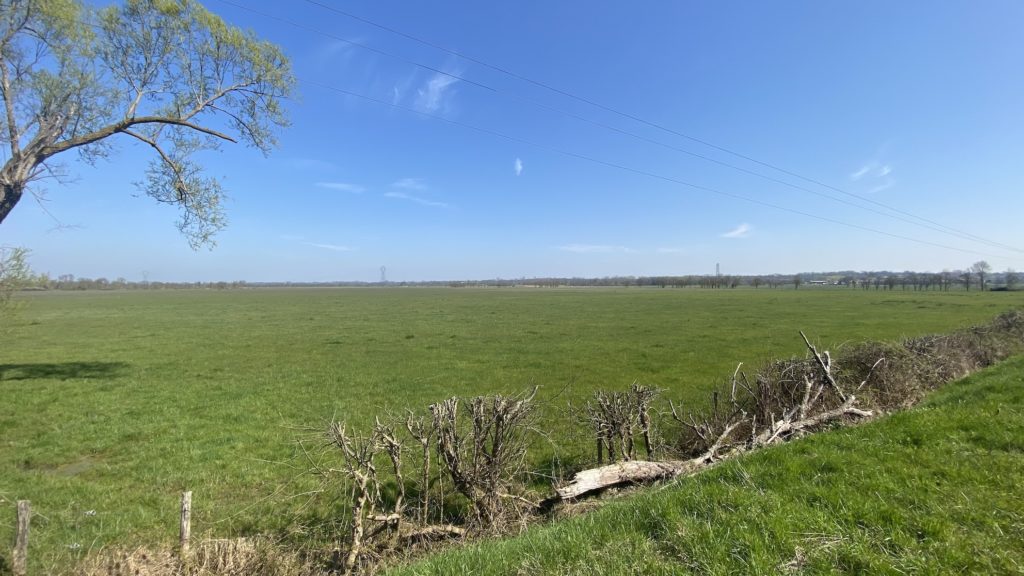
There is a field, roughly 9 kilometres north-north-east of Mâcon, that looks like any other in the Ain. Flat, wide, unremarkable. A modest stone memorial stands at its edge. Most people drive past it without slowing down.
Between 1943 and 1944, eight clandestine aircraft landed here in darkness. Resistance leaders passed through it in both directions. One of those who left from this field was destined to command the First French Army.
The field was codenamed ‘AIGLE’.
The location of this Landing site is no secret, but this is the story of how it became important to the Écrivélo story — and what finding it revealed.
The Document
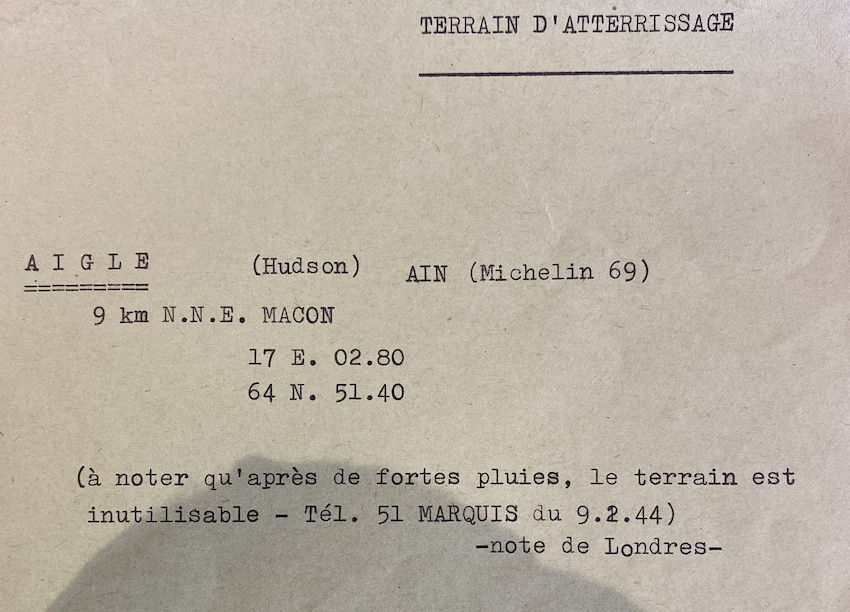
The trail began, as so many trails in this project do, with a typewritten sheet.
Held today in the archives of the Centre d’Histoire de la Résistance et de la Déportation (CHRD) in Lyon, the document is headed Terrain d’atterrissage — landing ground. It records, in the clipped operational language of wartime intelligence, the coordinates of field AIGLE: 17 E. 02.80 / 64 N. 51.40, located on the Michelin map 69, département de l’Ain. A practical note at the bottom warns that after heavy rain, the ground becomes unusable. The document closes with four words: note de Londres.
A note from London. Precision. Caution. Economy of language. Someone’s life depended on getting this right.
The document was compiled by Paul Rivière (1912–1998), a Lyon schoolteacher turned resistance organiser whose wartime career traced an extraordinary arc — from contact with Henri Frenay’s Combat movement in 1941, through arrest by Vichy police in 1942, to the head of the Section Atterrissage Parachutage (SAP) by mid-1943. From that position, Rivière coordinated some 220 clandestine air operations across the Rhône-Alpes region. His archives, preserved at the CHRD, are one of the most detailed operational records of SOE-linked air activity in southern France.
The Night of 7/8 August 1944
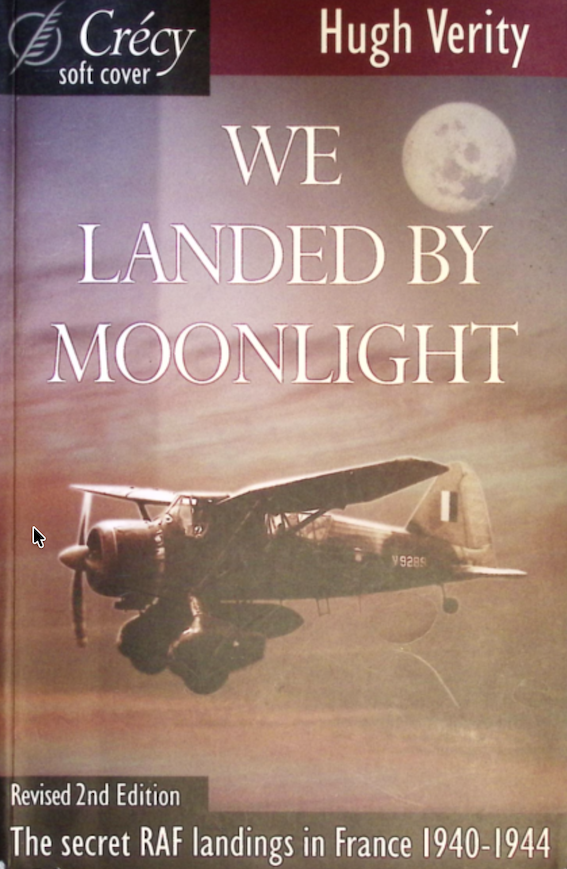
Operational confirmation for the AIGLE landing comes from a second source entirely: Hugh Verity’s We Landed by Moonlight: Secret RAF Landings in France, 1940–1944, a meticulous reconstruction of 161 Squadron’s clandestine operations.
The entry for 7/8 August 1944 records a Hudson aircraft — callsign ‘Carré’ — flown by Squadron Leader Wilkinson and Flight Lieutenant Wooldridge, departing for field AIGLE with the ground organiser listed as Paul Rivière (MACHETTE). The aircraft carried passengers outbound and brought others back. Among those being evacuated from occupied France that night were two American airmen: James Joseph Heddleston and George William Henderson.
Those names will be familiar to anyone who has followed the Worry Bird story on this site.
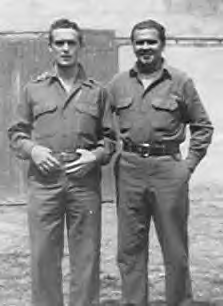
Heddleston and Henderson were survivors of the B-17 ‘Worry Bird’, which crashed at St Cyr de Valorges in the Rhône on 28 April 1944. They had been in hiding for over three months, sheltered by the French Resistance network, before being passed along a chain that led — eventually — to Paul Rivière’s SAP, to field AIGLE, and onto a Hudson bound for England.
The field near Mâcon was not simply a logistical detail. For Heddleston and Henderson, it was the last piece of French soil beneath their feet.
Lyon — Kew — Tempsford
Understanding how this chain fitted together required following it in person.
The CHRD in Lyon holds the Rivière family archives — the operational notes, the field descriptions, the coded communications. It was here that the typed AIGLE document surfaced, and here that Paul Rivière’s role as coordinator came fully into focus.
The National Archives at Kew provided the RAF side: operational records, crew lists, flight logs that confirm the night, the aircraft, and the passengers.
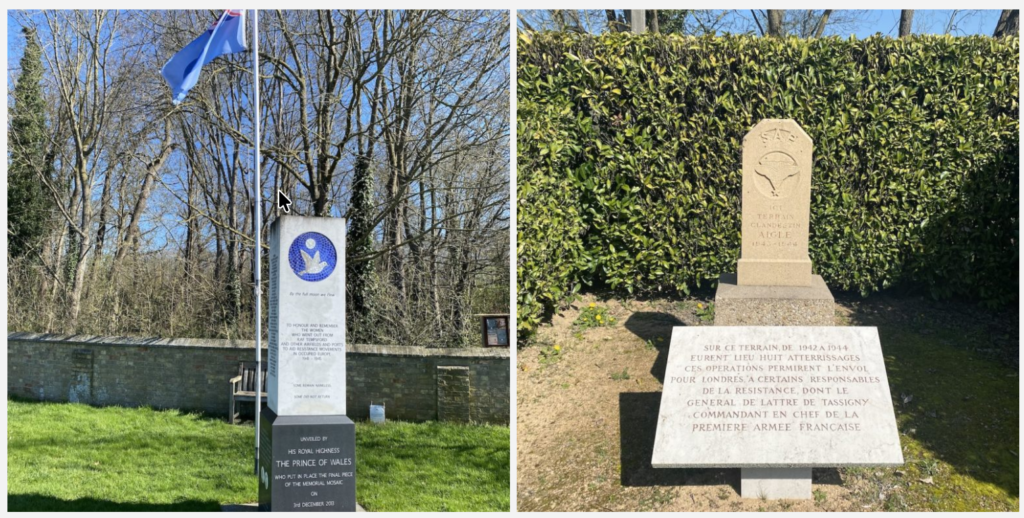
The final stop was RAF Tempsford in Bedfordshire — the former home of 161 Squadron, from which the Hudson carrying Heddleston and Henderson departed. A memorial now stands near the old airfield. Its inscription reads: By the full moon we flew. Some remain nameless. Some did not return.
The wreaths at its base were still fresh.
What the Wreckage Shows
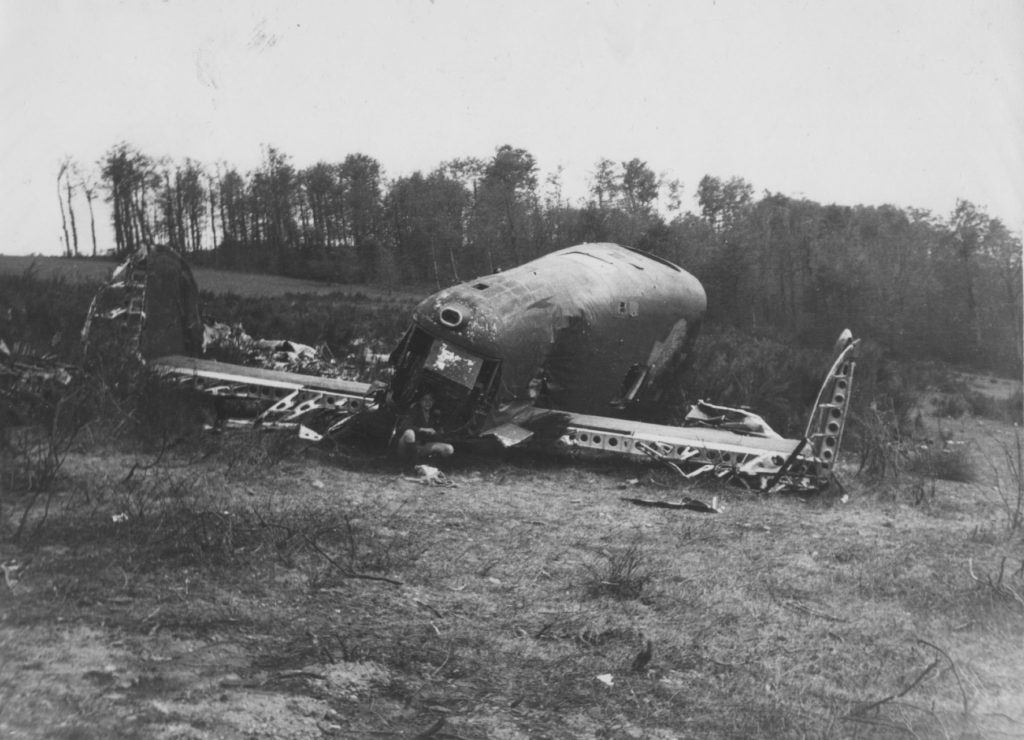
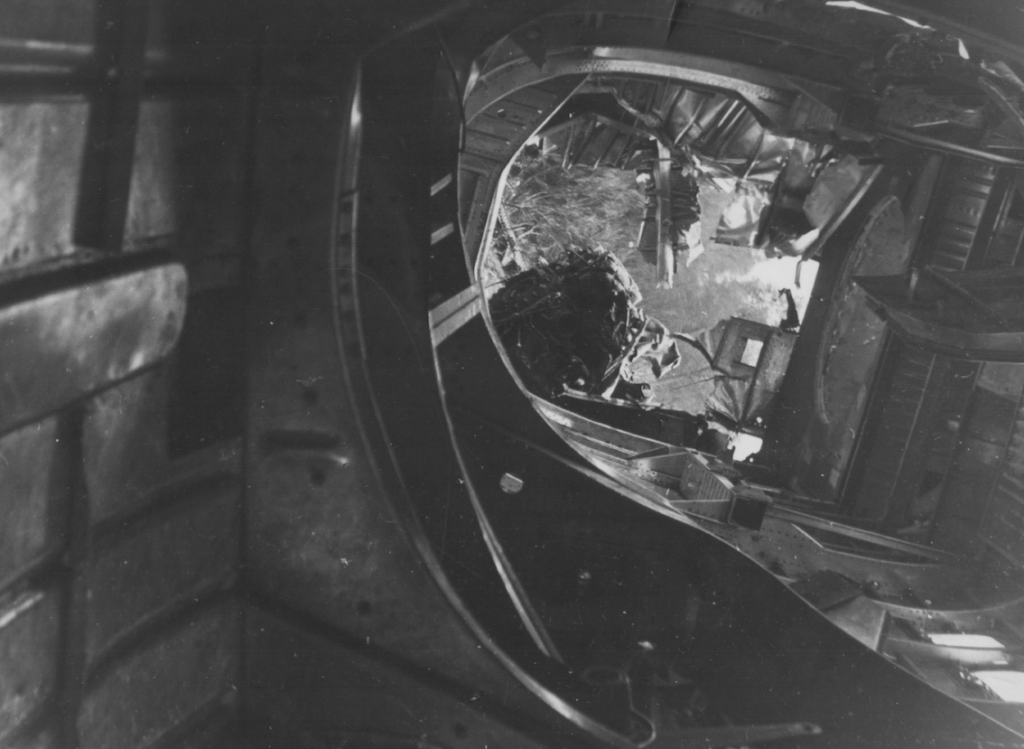
Alongside these archival findings sits a photograph taken at the crash site of the Worry Bird in 1944 by Colonel Robert L. Boone, Officer in Command of the 406th Bomb Group. It shows the aircraft’s fuselage largely intact, surrounded by torn and scattered wreckage, with a tree line beyond.
The photograph documents what was officially recorded. What it cannot show — what no photograph can — is the gap between the record and the reality.
During research for The Écrivélo Book, conducted across multiple archives in France and the United Kingdom in early 2026, something emerged about the crash at St Cyr de Valorges that sits uneasily alongside the accepted account. The details require careful handling, and they will be addressed fully in the book. But they are there, in the documents, waiting.
History noted the crash. It did not necessarily record the truth behind it.
The Field Today
The memorial at AIGLE carries an inscription that is worth reading in full:
Sur ce terrain de 1943 à 1944 eurent lieu huit atterrissages. Ces opérations permirent l’envol pour Londres à certains responsables de la Résistance, dont le Général de Lattre de Tassigny, Commandant en Chef de la Première Armée Française.
Eight landings. Resistance leaders. De Lattre de Tassigny.
And two American airmen from a crashed B-17 in the Rhône hills, who made it out alive — and whose story is not yet fully told.
Sources and References
- Centre d’Histoire de la Résistance et de la Déportation (CHRD), Lyon Archives Paul et Geneviève Rivière — operational documents, field descriptions, SAP records https://www.chrd.lyon.fr
- The National Archives, Kew RAF 161 Squadron operational records
- Verity, Hugh We Landed by Moonlight: Secret RAF Landings in France, 1940–1944 Revised edition, Crécy Publishing, 2000 Entry: 7/8 August 1944, field AIGLE, Hudson ‘Carré’
- Boone, Colonel Robert L. Photographic record of the Worry Bird crash site, St Cyr de Valorges, 1944 406th Bomb Group
- Memorial inscription, field AIGLE Ain département, France
- For background on Paul Rivière and the SAP: CHRD biographical notice, Paul Rivière (1912–1998)