
INTRODUCTION – Lyon under the bombs
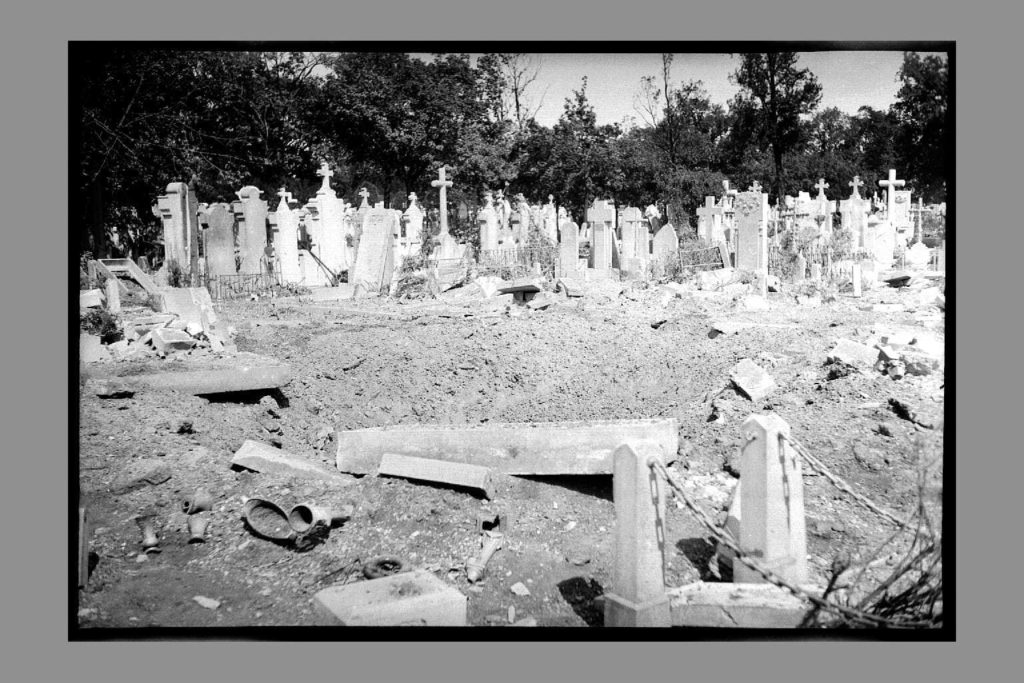
In the spring of 1944, Allied bombing over Lyon was aimed mainly at railways and industrial targets. In practice, it did not stop there.
The La Guillotière area — today part of Lyon’s 7th arrondissement — lay close to key rail installations, notably Lyon–La Mouche and Lyon–Guillotière. Contemporary accounts make clear that when these targets were attacked, bombs frequently fell well outside them. Smoke from earlier raids, combined with strong southerly winds, reduced visibility. Later formations released their bomb loads over the surrounding neighbourhoods.
Thousands of bombs were dropped over the Lyon area in a short period. Civilian districts were heavily damaged and casualties were high. On the ground, the distinction between military targets and civilian space proved fragile.
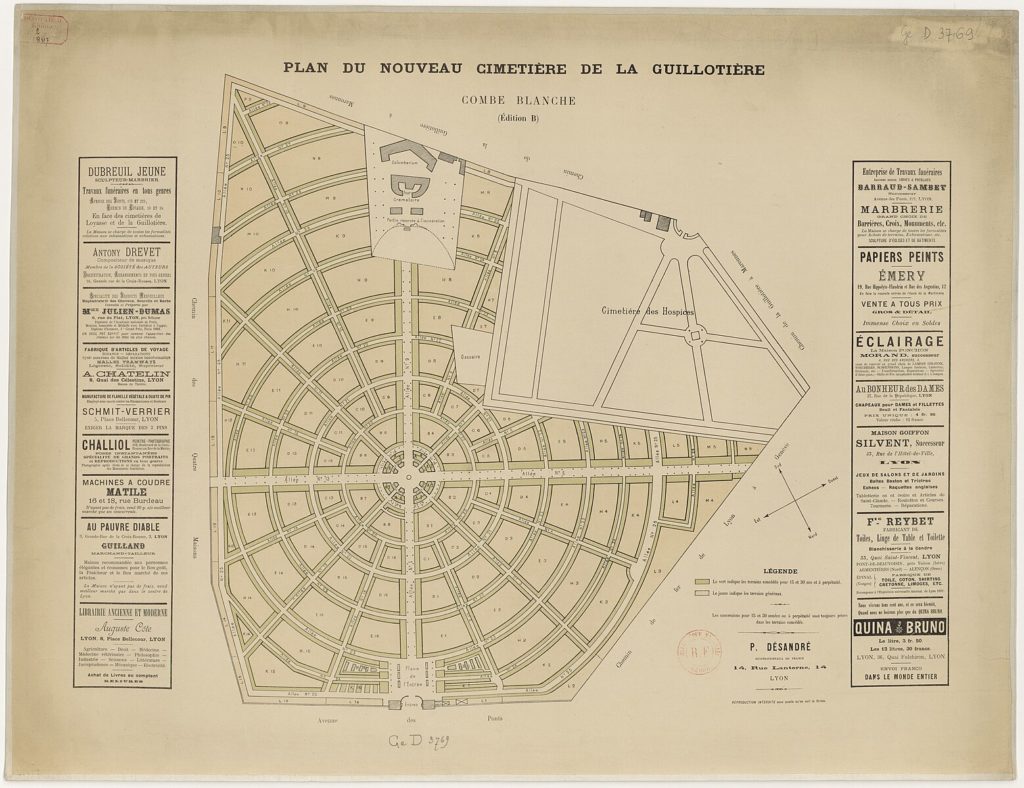
The Nouveau cimetière de la Guillotière, also known as Combe Blanche, is not named directly in bombing reports. Nevertheless, it lies squarely within the affected sector. Any damage there forms part of this wider pattern: a dense urban landscape exposed to bombing intended for nearby infrastructure.
The Story
During the Second World War, the cemetery was used for the burial of Allied airmen who died in the Lyon area. These burials are documented in the records preserved by the Archives municipales de Lyon.
The cemetery was divided into sections and sub-sections. One of these, section M, included a small area identified as M5, shown on surviving plans close to the outer wall. Municipal burial documents record Allied airmen interred in this part of the cemetery, with references to rows and plots.
The sources do not explain why this location was chosen, nor do they describe the burials as permanent. They establish only that the cemetery was used and that the burials were formally registered.
Bombing, policy, and consequence
An article published by Rue89 Lyon documents the traces — both visible and invisible — left by the Allied bombing of 1944 within the cemetery. It describes damage followed by rebuilding and reorganisation, without suggesting that the site itself was deliberately targeted.
« Le cimetière a conservé des traces visibles et invisibles du bombardement allié de 1944. »
— Rue89 Lyon, 7 August 2014
This fits with what historians now say about Allied bombing policy in France. France was not treated as an enemy state, and official doctrine emphasised restraint and precision. By 1944, however, with the invasion of Western Europe approaching, urgency took precedence. Rail networks were targeted systematically, even where they passed through built-up areas. Civilian losses were foreseen, accepted, and later justified as unavoidable.
What happened around La Guillotière was not exceptional. It was part of a broader shift in which operational necessity overrode earlier political caution — with lasting consequences for places that were never meant to be targets at all.
What remains — and what does not
Today, nothing in the cemetery indicates that Allied airmen were once buried there. Their presence survives only in municipal registers, plans, and administrative files, and in the indirect traces of a bombing campaign that reshaped parts of the site.
The absence of visible graves does not contradict the sources. It reflects the temporary nature of wartime burials and the physical transformation of the cemetery after 1944.
Sources and References
-
Archives municipales de Lyon
Burial registers and cemetery plans relating to the Nouveau cimetière de la Guillotière -
Rue89 Lyon
Au cimetière de la Guillotière, les traces du bombardement allié de 1944
7 August 2014
https://www.rue89lyon.fr/2014/08/07/au-cimetiere-de-la-guillotiere-les-traces-du-bombardement-allie-de-1944/ -
Les bombardements alliés sur la région lyonnaise en 1944, Cercle Aéronautique Louis Mouillard
-
Lindsey Dodd & Andrew Knapp,
“How Many Frenchmen Did You Kill? British Bombing Policy Towards France (1940–1945)”,
French History, 2008