
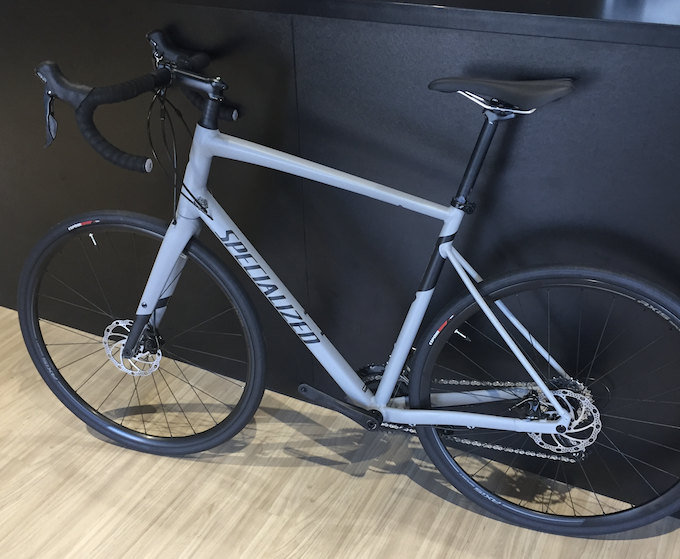
The Last Ride of FO John Christie.
On 26 August 2026 I left Orléans for Gien. Thirty seven kilometres in, the bike began to make a noise I had not heard before. Then another. Nothing had snapped, nothing had fallen off, but I knew where those sounds led: a roadside miles from anywhere, or worse. I stopped.
It was the 466th ride we had done together. It was also the last.
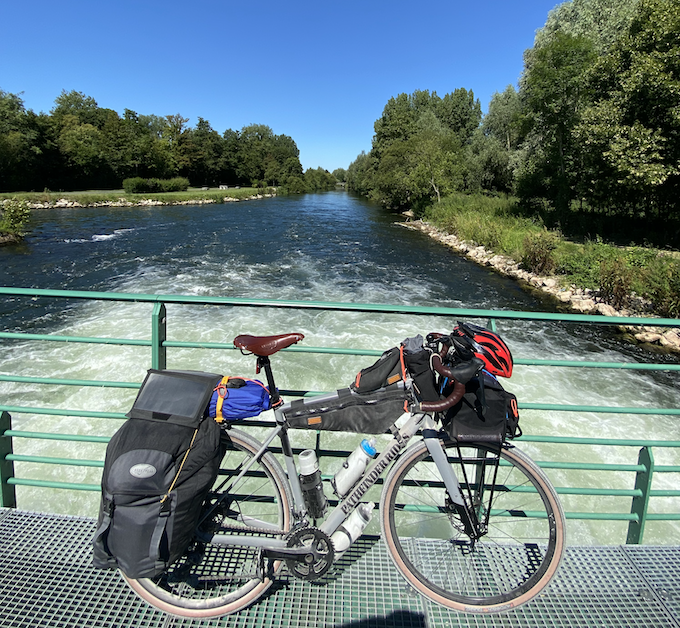
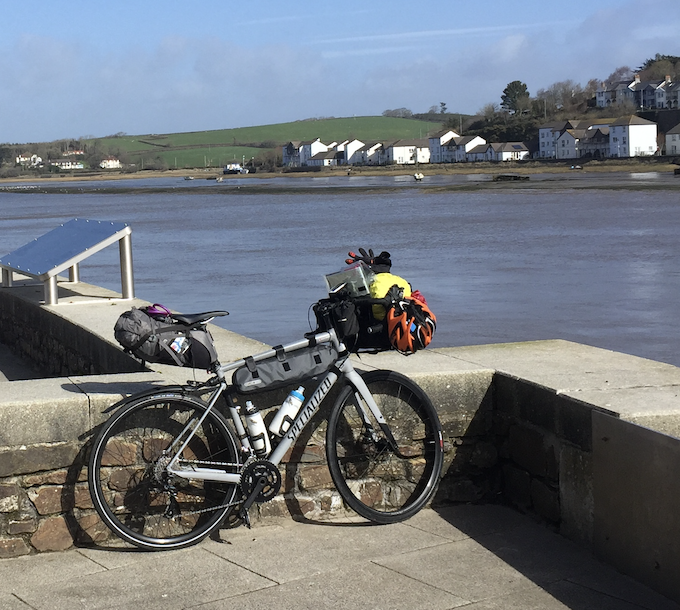
All my bikes carry the names of aircrew, or of aircraft, that came down near my home. I bought this one, a Specialized Diverge, in the spring of 2018. Its first outing on 25 April was a short test of under six kilometres. It already had a purpose: to carry me from Lyon to Lincoln. So it took the name of the man at the centre of my investigation. Flying Officer John Christie.
Lyon 2 Lincoln 2018
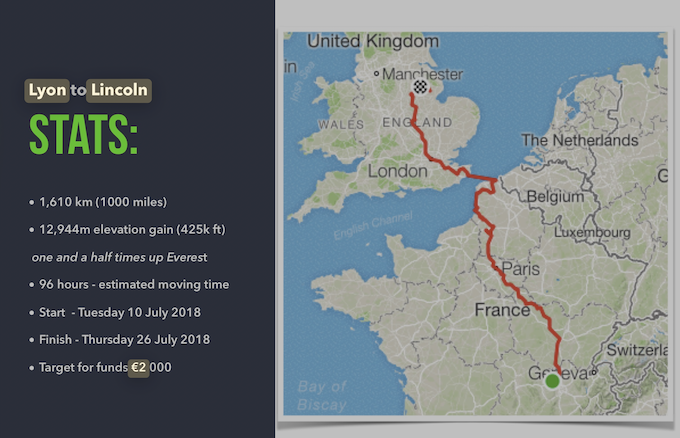
Lyon to Lincoln
That first journey began on 10 July 2018 and took eighteen days. We crossed France from the Beaujolais to Dunkirk in ten: 1,100 kilometres through Cluny, Tonnerre, Paris and the Somme estuary, some days well over 130 kilometres. Then Dover, and England. Rochester, London, Bedfordshire, a short detour to the old Carpetbagger airfield, and north through the Midlands to Woodhall Spa.
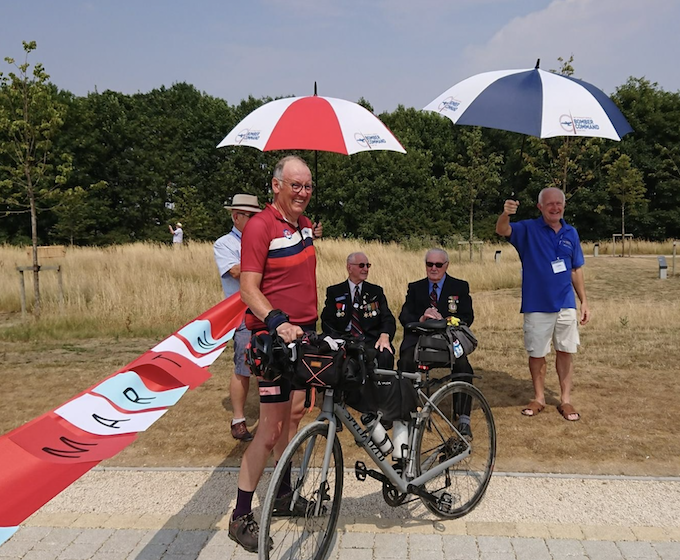
On 26 July I rode the last few miles to the Spire. In all, 1,728 kilometres and nearly 12,700 metres of climbing.
I walked through the International Bomber Command Centre with the bike beside me. I was exhausted. My father had died a short time before. He had supported everything I was doing. No moment on a bike has moved me more.
In Between.
Between the big journeys, the miles kept building.
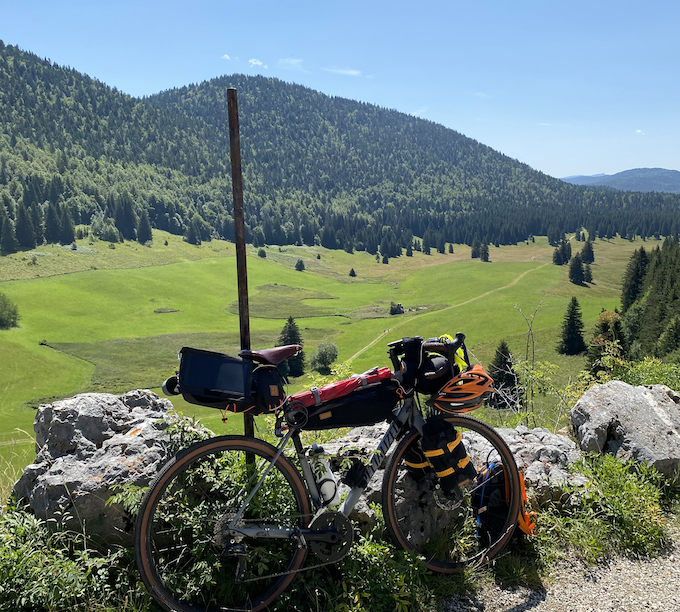
On 9 August 2021 I rode out of Grenoble and up onto the Vercors, loaded with camping gear. Three quarters of the route was gravel. It was only 39 kilometres, but it climbed 1,077 metres and took four hours and forty minutes. Nothing I have ridden before or since has been harder. Near the top, at Saint Nizier du Moucherotte, I stopped at the Nécropole nationale du Vercors: rows of white crosses on a hillside where the men of the Vercors Resistance are buried, facing the mountains they had tried to hold.
Some of the most important rides were the smallest. Short loops around the Somme, Poix de Picardie and Rouen, again and again, each one adding a piece to the story of John Christie’s early war: where he served, where he flew from, the ground he would have known.
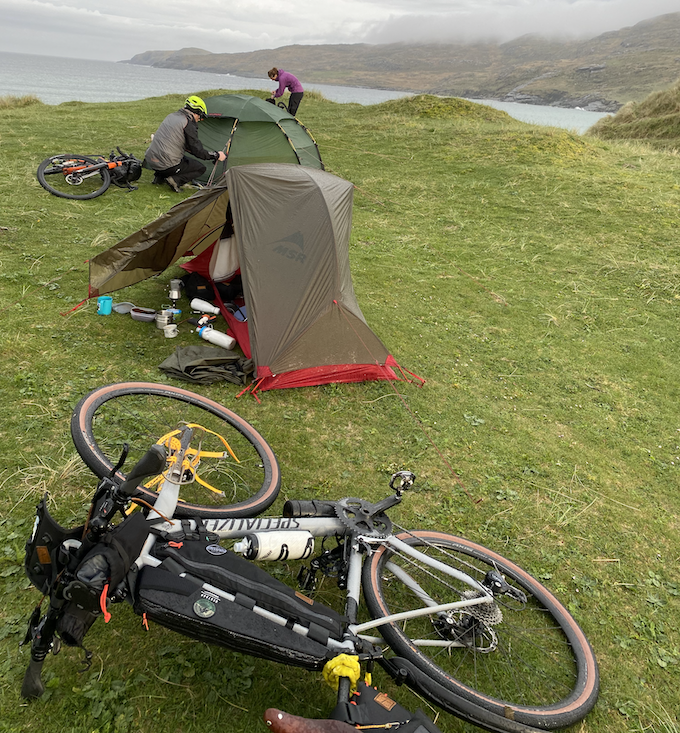
There were other roads too. The Devon coast to coast. Eriskay and Skye. Kent to Blackpool by gravel and campsite. A bikepacking weekend with my daughter that has become an annual fixture. And the hills of home: the Beaujolais cols and the Azergues valley descents. The longest single day was 142 kilometres. The most climbing in a day was 1,373 metres, in the Massif Central.
When I left the Police, I never dreamt that I would require the expertise of a forensic odontologist again.
Colin’s brother Alastair Panton had just been promoted to Acting Flight Lieutenant, flying Bristol Blenheims. Fifty years later he wrote of his days with 53 Squadron during the Battle of France in 1939 and 1940. Six Weeks of Blenheim Summer describes his life as a Blenheim pilot, flying alongside Sergeant John Christie as they watched the German army advance across Belgium. My book Écrivélo covers the days I spent in and around Poix de Picardie, tracing their lives with this memoir as a guide.
Colin Panton’s grave came onto my radar not because it was lost, but because it once carried a different name. He had enlisted under an alias, John Avery Lockart, and it was only after the war, through police enquiries, that the mistaken identity was resolved.
Here is the strange part. The author of Six Weeks of Blenheim Summer, Colin’s own brother, knew the truth. He never put it in the book.
I was using the memoir as a touchstone while tracing the early life of John Christie, the Scottish airman who died in a Mosquito crash near Ternand in 1944. But the deeper I dug into the Poix community, the more the anomalies stacked up against the text.
The lesson, as ever with eighty year old memories: never trust a single source. Corroborate everything.
The full story, and how a forensic odontologist I had worked with in the past helped confirm beyond doubt that Colin Panton and John Lockart were one and the same, is in Écrivélo.
Eastward
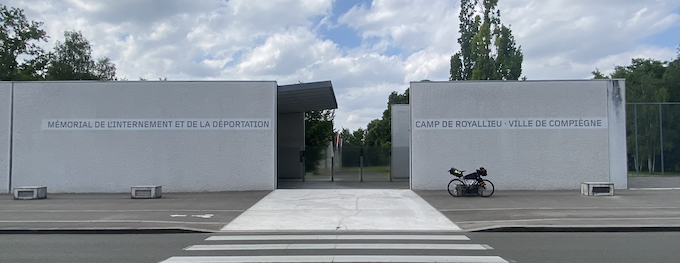
Six years after Lincoln we went east. In June 2024 I set off from Roanne and rode north through Burgundy, skirting Paris, to Compiègne. There I visited the site of Frontstalag 122, the German internment camp at Royallieu. From its gates, tens of thousands of prisoners were marched to the station and loaded onto trains bound for the camps in the east. I left Compiègne by train too.
I spent a day with a friend in Brussels, then took to the bike again and rode out past the place where, in 1940, a Bristol Blenheim piloted by Alastair Panton came down. Its observer was a young Sergeant named John Christie. The man the bike was named after.
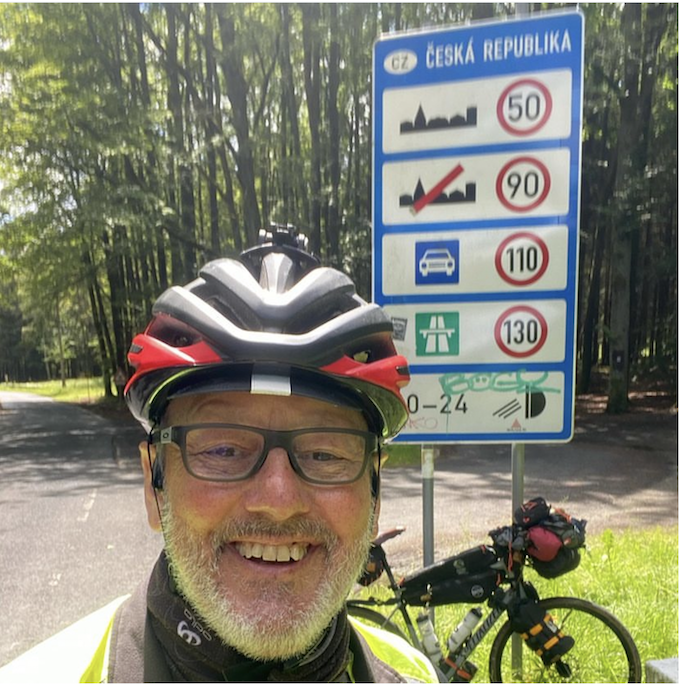
From there I crossed into Germany at Aachen and rode past the Möhne and Eder dams, then on to Colditz. I crossed into the Czech Republic at Cheb, came back through Flossenbürg, and ended in Nuremberg on 26 June.
Over 1,600 kilometres and 10,000 metres of climbing, almost a thousand of those kilometres in Germany and the Czech Republic. I passed places I had read about as a boy. And I was following the route of Mayor Sonnery’s final journey from Chamelet.
The count
By the end the totals read like this: 466 rides, 14,536 kilometres, and 148,564 metres of climbing. That is Everest nearly seventeen times over. The true figures are higher; more than once Strava gave up before I did.
Numbers tell you how far. They don’t tell you what the distance was for.
What the bike gave me
A bicycle sets the pace of research. You move from place to place in your own time. You stop. You look. You take in the ground: the gradient of a road, the distance between a village and a crash site. At night I sat in the tent and wrote. And on the open road, people talk to you in a way they never do through a car window.
Cycling has never been only pedalling for me. It is how I get into the history.
Retirement
Given the distance, the weight carried and the terrain, much of it gravel, the end was no surprise. There had been major repairs before. This time a full rebuild would have cost more than it was worth.
The bike is not going anywhere. It stays with me, and perhaps, slowly, I will put it back together. You become attached to a machine that has been through that much with you.
What comes next
There will be a new bike. I cannot see myself stopping. It will be another Specialized, the most comfortable bike I have owned, and it will carry a new name, not yet announced.
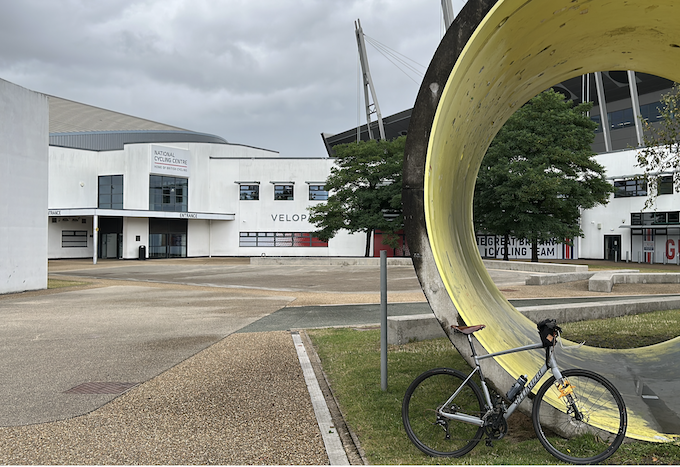
There is an irony. Six days before Orléans, that last trip took in a full bike fit at the National Cycling Centre in Manchester. Now I will have to go back and do it again.
This post is also available in:
 Français